
Tattnall County Arrest Date Search
The county's multi-day view lives on the official Inmates by Arrest Date page. It offers From and To boxes. You set the span yourself. Think of it as a reader-built log, not a fixed weekly roster, a 72-hour list, or a promised archive. The live system simply returns whatever falls inside your chosen dates. That freedom helps when a booking happened near midnight, over a weekend, or before you started searching. One caution applies. The date field reflects the vendor's arrest date, which may differ from the exact moment someone entered the Tattnall County jail. Entries show status. A person is marked CURRENTLY BOOKED or RELEASED. A released person is still in the arrest log. That tag just means no current custody.
The official date-range interface shows the calendar controls used for a multi-day query.
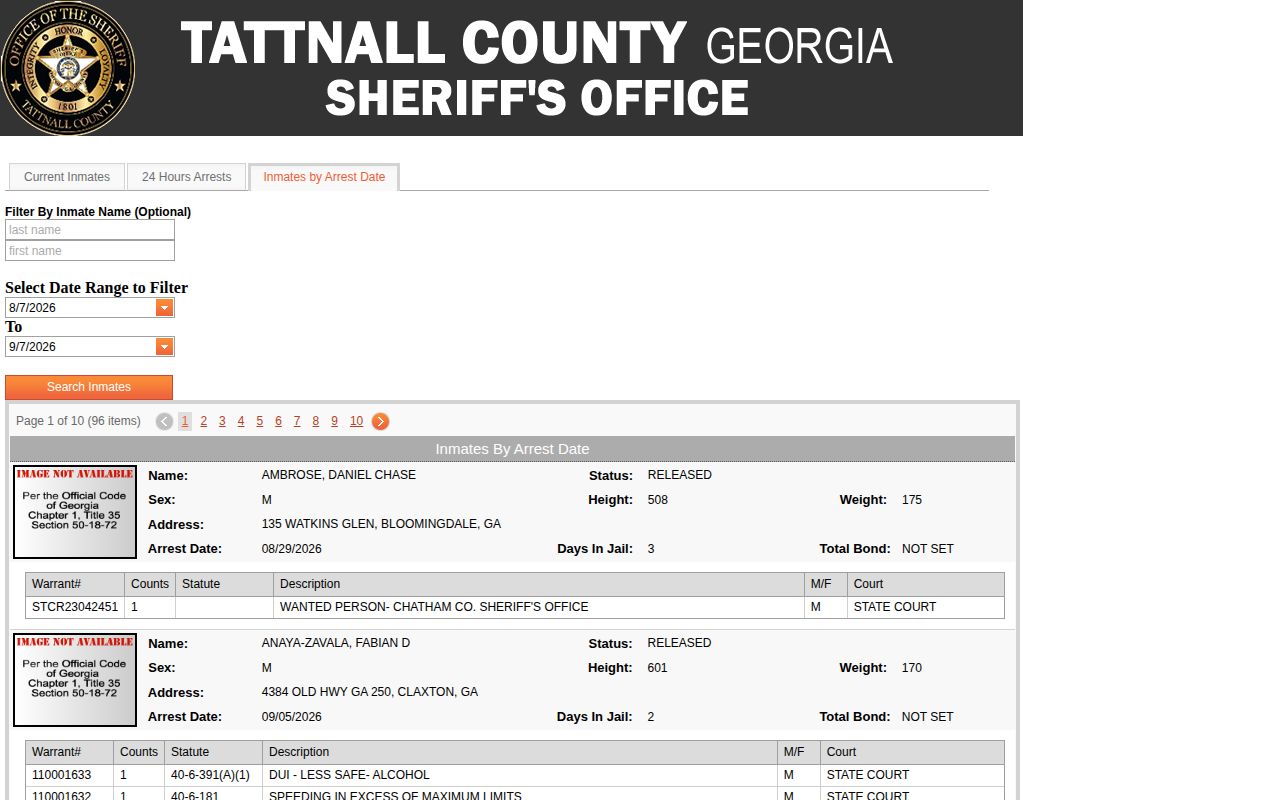
Use the live screen for current dates and entries.
Read the Tattnall Arrest Blotter
Start with the event date, not the day a story ran. Search a narrow window first. Widen it only if the arrest you want stays missing. Tattnall County's shared jail receives bookings from many agencies. Credit goes to the sheriff, the Reidsville Police Department, Georgia State Patrol, municipal police, and others. An address alone never proves the arresting agency.
- Open Inmates by Arrest Date and set a From date and To date around the event.
- Submit the query, then move through each results page instead of stopping after the first screen.
- Match name and descriptors before relying on a row with a similar name.
- Read arresting agency, arrest date, status, court, charge, and bond as separate fields.
- Check the court docket for later disposition and request the official booking record when a field is unclear.
For a booking from the rolling day, the Tattnall County 24 Hour Arrests view is faster. Use the date-range log for a chosen span. It also catches records after the same-day window slides past. Neither view promises blank fields will fill in later.
Tattnall Arrest Log Fields
The InterOp record cards expose many intake fields. Not every card is complete. The interface ships with no public data dictionary. Treat field descriptions as reading aids, and confirm exact wording with the Tattnall County Sheriff's Office when precision matters.
| Entry field | How to interpret it |
|---|---|
| Name and traits | Name, sex or gender marker, height, weight, and address may help distinguish similar records. |
| Arrest date | The date assigned in the vendor record, not a guaranteed booking-room timestamp. |
| Arresting agency | The agency credited with the arrest, which may differ from the jail operator. |
| Status and days | Current or released status and days in jail when shown. |
| Counts and charges | Warrant number, count, statute, description, and court fields as entered at booking. |
| Bond and image | Total bond plus an image area that does not guarantee a public photo. |
Total bond is not a sentence. It rarely explains every hold placed on a person. The booking card captures intake, not the case's end. Court outcomes live in a different record. Follow the clerk's file when the result matters. The booking card may never receive that update.
Note: Released and currently booked entries can share one Tattnall County date query, so check status before describing custody.
Agencies in Tattnall Arrest Records
This log is a jail-system query. Tattnall County booking views include county, municipal, state, and even a nearby-county agency. The mix reflects where a person was processed or held, not who patrolled that street. An address shown proves neither agency nor scene.
The arresting-agency field tells you where to route questions. The Tattnall County Sheriff's Office runs the jail and issues booking sheets. A city department may hold its own incident report. Georgia State Patrol keeps its own enforcement report. The Clerk of Superior Court maintains criminal dockets and the later court history.
This split prevents a familiar mistake. One database is never the whole case file. Intake, incident, custody, and court records come from different offices. Name the record you want. Send the request to the office that likely holds it.
Tattnall Arrest News Is Selective
Check official booking data before trusting secondary coverage. The Journal Sentinel crime section publishes selected arrest, wanted, jail, and investigation stories. Articles may name an agency and reported charges. Photos may come from booking, the agency, or the scene, and coverage is story-driven rather than a complete daily blotter. Pieces may go unrevised after a court disposition. The independent Georgia Gazette Tattnall section posts selected booking stories and incident-report narratives, sometimes with a photograph. RecentlyBooked keeps a county page claiming frequent updates over a recent span. Both are unofficial, can go stale, and should trail the county portal rather than lead a custody check. No faces or entries are reproduced here. The local crime archive shows its article-based format.
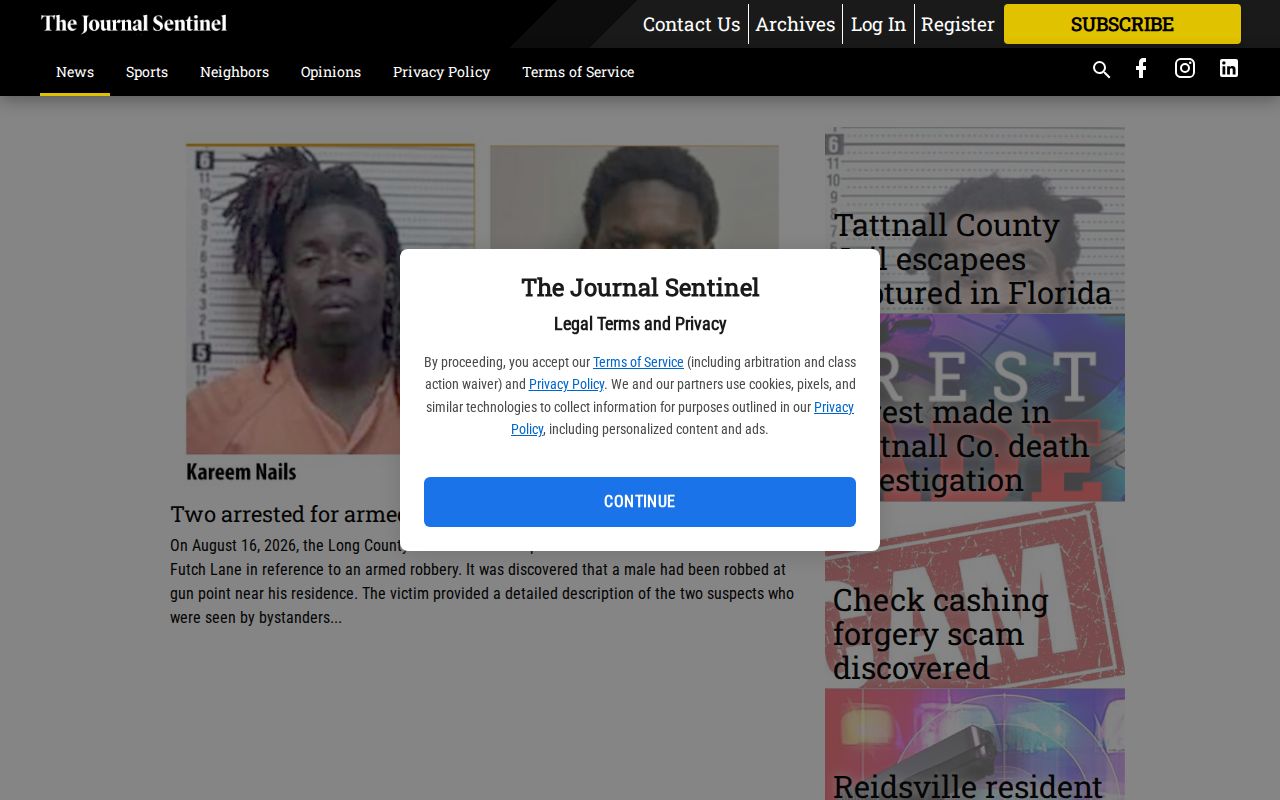
News stories can add incident context. They cannot verify custody or outcome alone. A Journal Sentinel booking story shows how one arrest can draw detailed coverage.
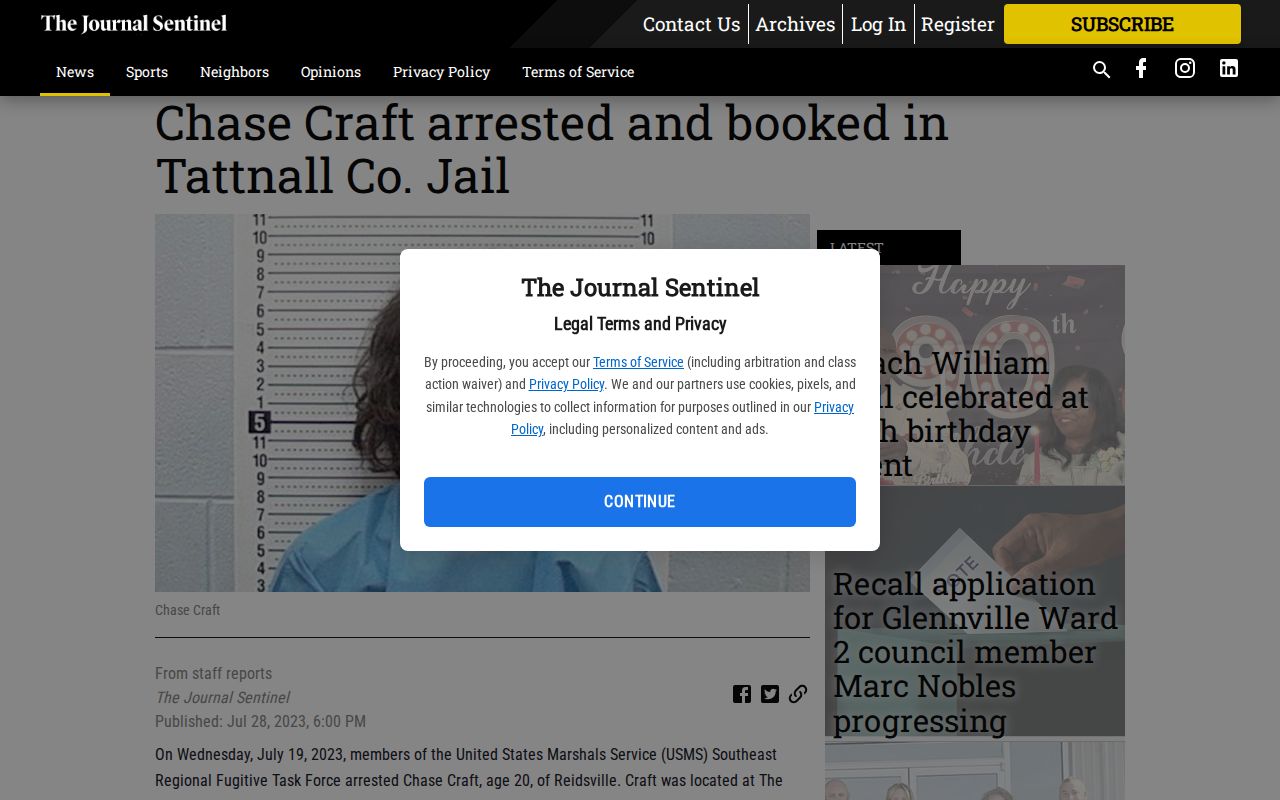
The example documents the news pattern without implying that unreported bookings did not occur.
Older Tattnall Arrest Records
Tattnall County publishes no fixed retention schedule for booking sheets, photographs, or jail logs. Old arrest dates can linger on a current roster for a simple reason. A custody record stays active. That is not a retention rule. Nothing about the From and To search controls promises that every historical date remains online. Vendor entries vanish on their own timetable too, regardless of what the sheriff still holds.
Need an older Tattnall County arrest record? The county open-records instructions are the right starting point. Name the person. Give a narrow date range. Add the arresting agency if you know it. Then describe exactly what you want, whether a booking sheet or a jail photograph. Ask the custodian whether the record exists and request a cost estimate up front. The county warns that charges may apply. It also says it will contact requesters before processing when costs arise. Still, it publishes no fixed booking-record fee and no guaranteed turnaround.
Where you go next depends on the item. The sheriff handles a local booking record. The clerk keeps court dockets and some permanent files. The Georgia Department of Corrections covers state-prison custody. The county archives hold historic court and county material. No office doubles as an automatic archive for modern jail photographs. Pick the route that matches what you actually need.
Archives also mean different things to different keepers. A Journal Sentinel story stays online because it remains part of the paper's published record. A court docket can run long after release because the case is still pending. None of these systems corrects the others. Does an old search result clash with an official file? Ask whichever office or publisher controls that copy to review the underlying disposition.